
I’m Lisa Tirreno, and I have a procrastination problem.
It was never an issue when I was a journalist, because I was plugged into a team that needed me to get things done on time. Short, constant deadlines are wonderful.
Now, without those, I find myself putting off all sorts of things: household maintenance, cleaning, phone calls. I’ve spent years tricking myself into doing things I would normally procrastinate on, to get out of doing other things that I want to put off more. While I was doing my postgrad program, the house tended to be pretty spotless and I got in almost every round of edits of Prince of Fortune to my editor early, while I was procrastinating on assignments.
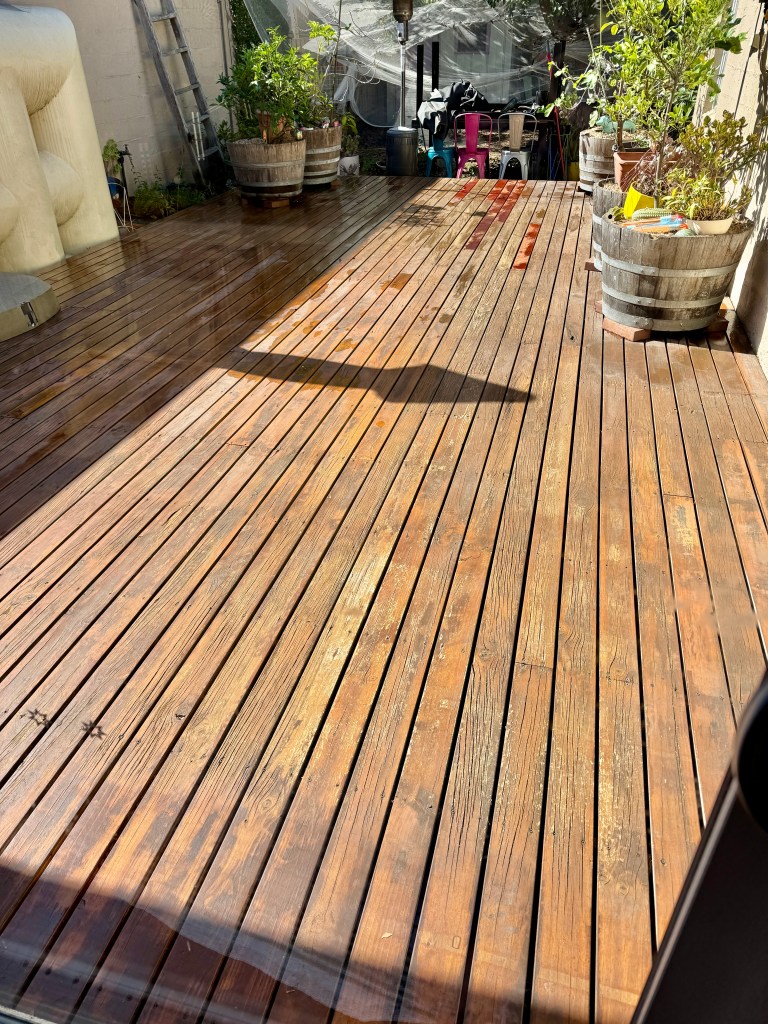
The last few months, while I’ve been trying to avoid writing my current manuscript, I’ve gone on a house-maintenance kick. Everything that I had been putting off there has now been done. There is also not a single dodgy light switch or unserviced appliance left. See this deck, pictured? That’s now repaired and painted.
There have been so many tradespeople in my house.
And then that left me with me, and the blank page, and me realising what I was doing.
I tried thinking about what I did to get Prince of Fortune finished. That time around, seeking out other writers to talk to about writing helped. Since I now do this regularly, it has not helped. We mostly talk about how we’re all stuck. “Book two blues”, it’s called.
I tried finding myself a new accountability partner, and now we check in once a week; but it also isn’t enough, since she is just so nice. I probably needed to find someone meaner. And more shame-y.
Since those things haven’t worked, I have now turned to the dark side: Gamification.
What are you talking about, Lisa? What the hell is “gamification”?

So remember how I mentioned above that I’ve just finished a postgrad? Gamification was one of the things we covered and I was delighted to learn about it because I had seen it popping up everywhere and not known what to call it.
It’s when elements you would normally see in games or competitions turn up in non-gaming contexts, to try and influence your behaviour. It is rife within social media apps. When Facebook gives you a badge for being a top commenter in a particular community or Tiktok tries to get you to have a chatting streak with a friend or Tumblr congratulates you on publishing five posts? Gamification.
One of the more benign places a lot of people experience it is on Duolingo. Apologies to those of you who are not in this language-learning cult with me, but it is actually a really good example of how gamification can keep people coming back to do thing X everyday, making it a habit.
The app uses a variety of tricks, done very well, that are designed to appeal to every type of player, since different things motivate different people. Some people like to be winners, and beat other people: leaderboards are good for that. For others, who aren’t competitive (that’s me), you can see how much progress you made against last week or over time. Or, for people who like community (again, me) you can do streaks with friends (for accountability) or high five them for their own progress (for encouragement).
Sometimes, gamification is weird and pointless. Sometimes it’s patronising and annoying. When businesses and governments use it, gamification can get a bit dodgy. Adrian Hon wrote a terrifying book about it.
But when you’re doing it to try and trick yourself into making progress on something you actually need to do? Meh. Whatever gets the job done.
So now I have a system.
I put my new word count into a special little writing diary at the end of every day I write. This was actually something I did when I wrote Prince of Fortune, and it helped with accountability and a sense of achievement, but also just feeling like things were happening, and under control.
I have set myself a very reasonable minimum word count per day (just like one little five-minute Duolingo lesson is very, very achievable); if I meet it, I get a sticker. If I write more than double that number, I get a bigger sticker.
I need to get five stickers in a week (I’m allowed to have two days off, just like you get two streak freezes in Duolingo before you’re in trouble and need to take a long, annoying test to get your streak back) and then I get a really big sticker.
I don’t care about the stickers. I found them in the back of a drawer; I had gotten them for free in the first place. The point of the stickers is that I can flick through the diary and see all those stickers and feel a sense of accomplishment—I earned those stupid stickers—and I have now started going “oh no, wait, we haven’t hit our target for the day, I’m not going to get my sticker” before going to bed, just like I do with Duolingo, and I will then pull out my laptop and get myself over the mark.
It sounds silly, but it’s gotten me back on track for my goal, which is what I needed it to do. It’s made daily writing a habit again, instead of the daily procrastination, guilt and frustration cycle that had been my new habit instead.
Pointless stickers wouldn’t work for everyone. Gamifying your own habits would work differently for different people. Competitive types would probably want to be in a group where everyone was trying to have the most word count every day/week/month. People who need a stick as well as a carrot might need to forbid themselves to watch their favourite show or something, until they’ve done their words for the day. I read recently of one writer who forced themselves to sit at their desk, and made it a rule that they either had to write while sitting there, or eat sour candy. They would burn their mouth and then have to write, since they couldn’t eat any more sour candy.
I would simply not eat the candy. Or find reasons to get up. It just wouldn’t work with me, especially since I tend to become stubborn or rebellious in the face of anyone trying to force me to do anything (including myself), instead of asking nicely. But I’m glad it worked for them!
Gotta love it when you can game the system, even when the system is your brain.
 Lisa Tirreno